
Ever since I have been cooking in my adult years I have been fascinated with Indian flavours. It started with me experimenting by adding curry powder to anything that would take it (much to the horror of those around me at the time), it then progressed to shop-bought pastes and finally to toasting and grinding my own spices, making my own pastes and using those pastes to create many different concoctions. This madras paste is my favourite, a recipe that has been with me for over 25 years. It started from a book and while I still have that book, it is now stained with turmeric and chilli and has my hand-written notes and adjustments that I have made over the years. I can’t even thank the author of the original recipe as it’s a book that has recipes anonymously written by 34 different cooks.
I have been calling this “Madras Paste” for the past 25 years, but when I delved into the intricacies of “Madras Curry” I found that it’s something that was invented in England, and if you went to Chennai (formerly Madras) and asked for one, they would just look at you weirdly as it doesn’t exist. Even after my “deep dive” into Madras curries, I’m not really sure what one is, every recipe seems to be completely different, some use tamarind and fenugreek others have bay leaves, curry leaves, lemon and lime juice.
From my “extensive” research I can establish that most have cumin, coriander, black pepper, turmeric, chilli and salt (yes I understand that doesn’t narrow it down much as a significant number of Indian dishes have those ingredients). However until someone emails me and says “Hey my grandfather invented Madras Curry and you don’t know what you’re talking about” (and they present me with some solid evidence), I’m calling this Madras Paste.
I know that it looks like a lot of ingredients and a significant amount of work, it’s not really and the paste is enough for three dishes, so you can freeze it (or use it tomorrow night), I hope you enjoy it as much as me, my family, my friends do and even some randos who have tried it at dinner parties over the years.


Ingredients
Method
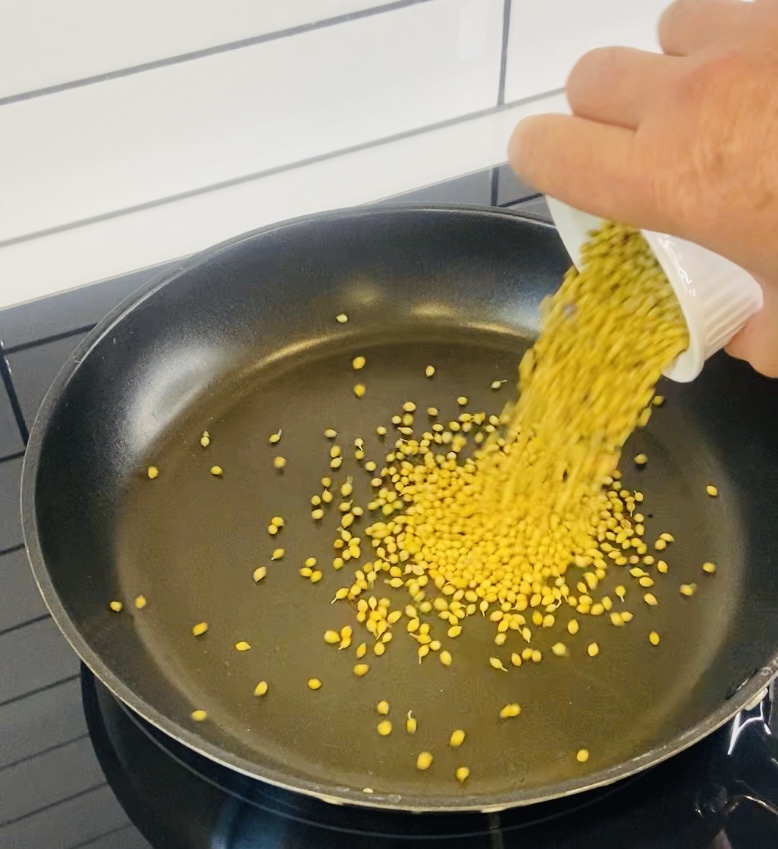
- Heat a heavy based frying pan and dry fry the coriander, cumin and pepper corns for two – three minutes, then add the mustard seeds and fry for a further minute, when the mustard seeds should start to pop!

- Allow to cool slightly and then grind the seeds in a spice/coffee grinder or if you are old-school and need a work out a mortar and pestle.

- In a bowl add the remaining spices, garlic, ginger and vinegar to the ground spices and combine.

- In the same frying pan (hey if you are doing the dishes and want to use a new one go for it, but if you are looking for somebody else to clean up, show some respect) heat the oil over a medium heat, add the spice mix and fry for about 3 minutes, turning constantly.

- This should be enough for about three curries that will serve four people, so divide up accordingly and refrigerate or freeze what you don't need right now.
- To go to the next step visit Murgh (Chicken) Madras
Leave a Reply